
French wheel with La Partage
A single-zero wheel that returns half your even-money stake when zero lands. That halves the edge on those bets to 1.35% — the cheapest roulette you will find.
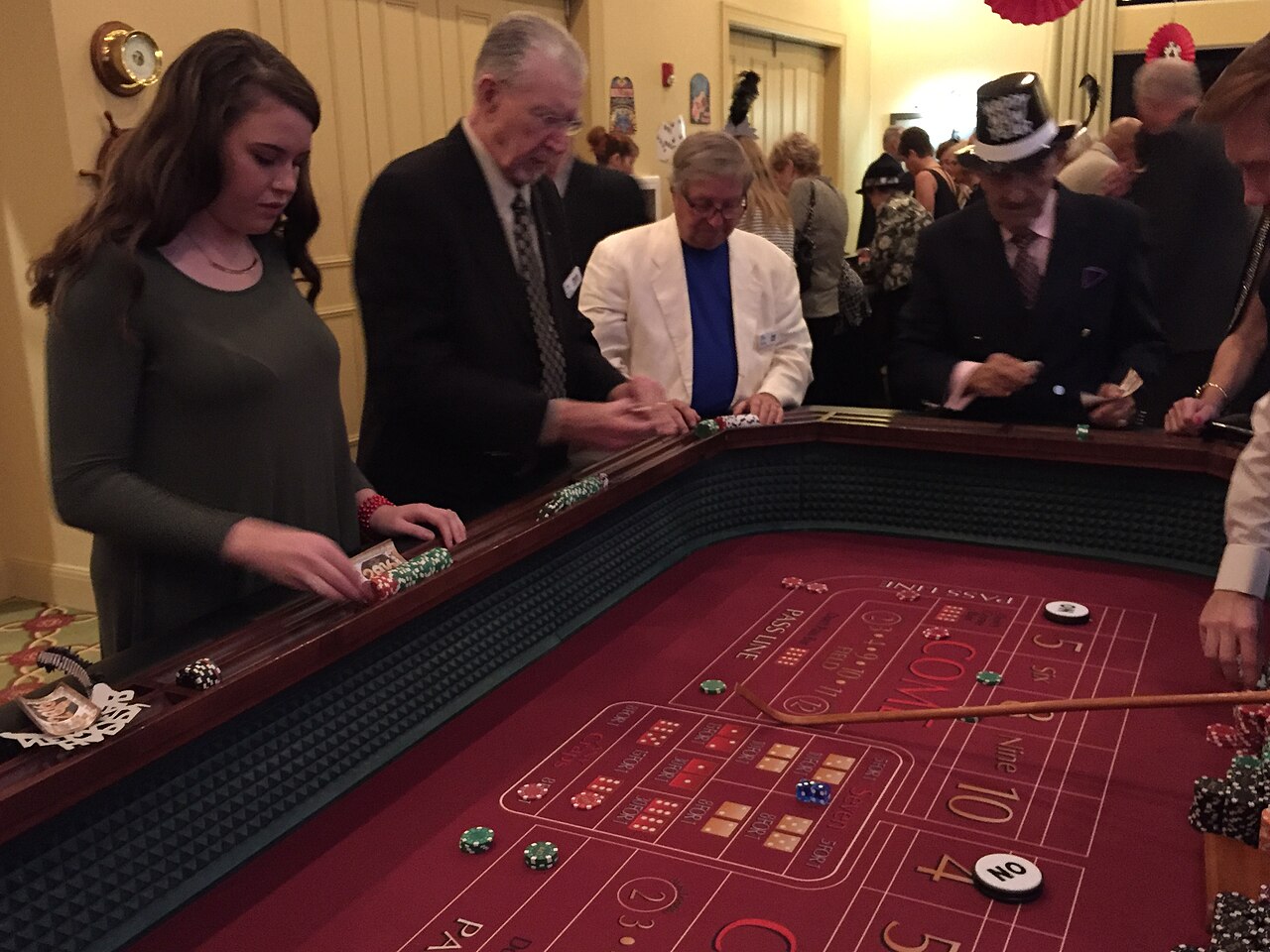
European, French & Lightning
The FairPlay wheels run European, French and Lightning, and on a European layout every bet costs exactly the same 2.70% — a straight-up number and red-or-black are priced identically. What changes is how the money arrives. Full payout chart below, plus what the Martingale actually costs when it fails.
Payout Chart
Look down the last column. Every single bet on a European wheel costs 2.70% — the game is priced so that no choice on the layout is better value than another.
| Bet | Covers | Pays | Wins | House edge |
|---|---|---|---|---|
| Straight up | 1 number | 35 : 1 | 2.70% | 2.70% |
| Split | 2 numbers | 17 : 1 | 5.41% | 2.70% |
| Street | 3 numbers | 11 : 1 | 8.11% | 2.70% |
| Corner | 4 numbers | 8 : 1 | 10.81% | 2.70% |
| Six line | 6 numbers | 5 : 1 | 16.22% | 2.70% |
| Column or Dozen | 12 numbers | 2 : 1 | 32.43% | 2.70% |
| Red/Black, Odd/Even | 18 numbers | 1 : 1 | 48.65% | 2.70% |
Why they all come out the same. Multiply the payout plus one by the share of the wheel you are covering and you always get 36 over 37. A straight-up number: 36 × 1/37. Red or black: 2 × 18/37. Identical. The only decision that changes your expected cost is which wheel you sit at, not which bet you place on it.
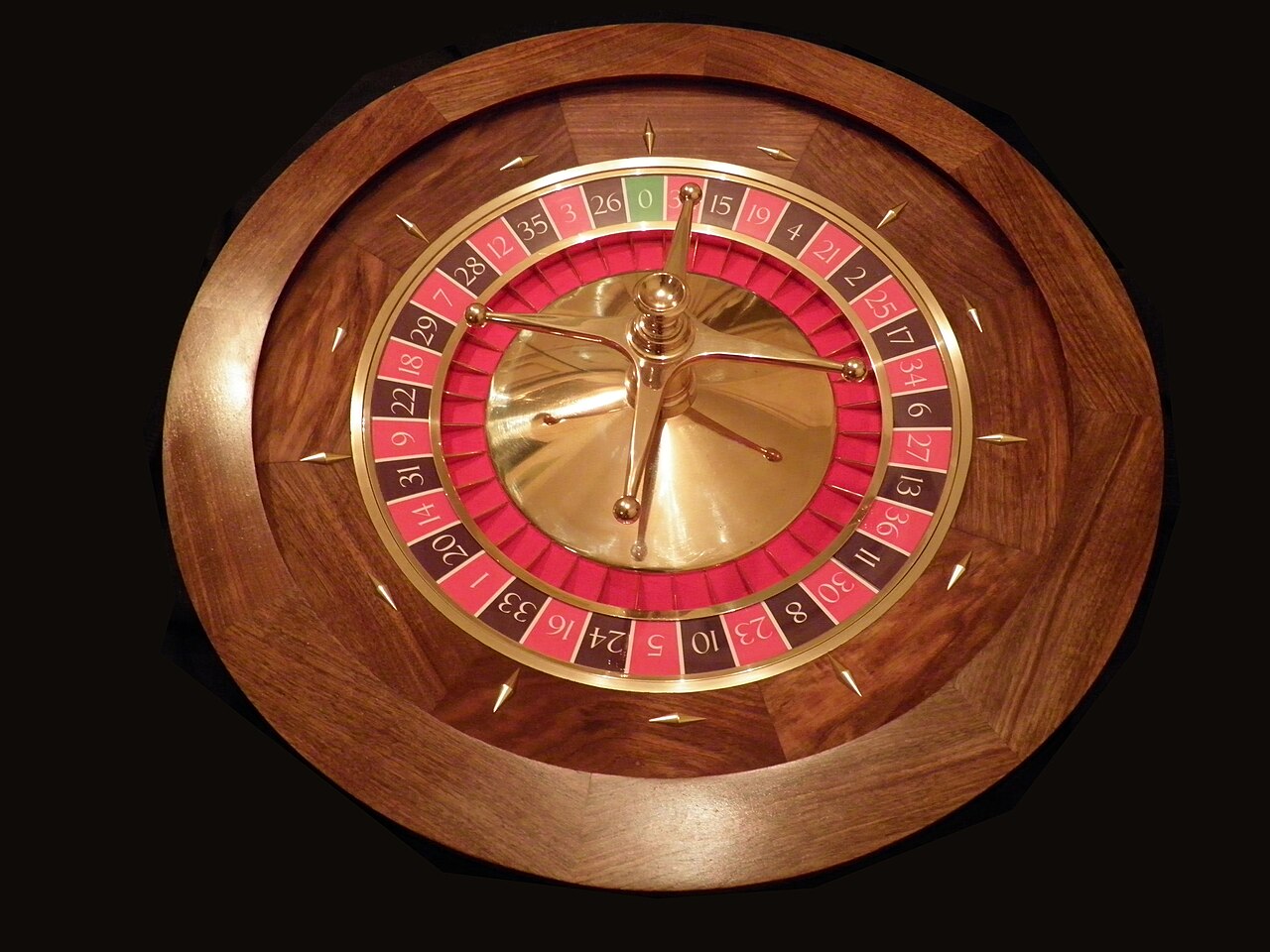
Which Table
Six variations on the same game, priced between 1.35% and 5.26%. Picking well here is worth more than every betting decision you will make afterwards.
A single-zero wheel that returns half your even-money stake when zero lands. That halves the edge on those bets to 1.35% — the cheapest roulette you will find.
Thirty-seven pockets, one zero, 2.70% on every bet on the layout. The default choice and perfectly reasonable.
A second zero takes it to thirty-eight pockets and 5.26%. Identical to play and almost twice as expensive, for no benefit whatsoever.
Random multipliers up to 500x land on selected numbers each round, funded by paying less than 35:1 on straight-up wins that are not multiplied.
A real wheel spun on camera with about twenty seconds to place chips. Slower than an RNG wheel, which makes an hour of it cheaper at the same stake.
An alternative zero rule on some French tables: your even-money bet is held for the next spin rather than half-returned. Similar effect to La Partage.
The System, Priced
The Martingale is the most popular roulette system in the world. Here is the exact sequence it produces from a ₹100 starting bet, and how often it gets that far.
| After this many losses | Next stake | Total staked |
|---|---|---|
| 1st bet | ₹100 | ₹100 |
| 2nd | ₹200 | ₹300 |
| 3rd | ₹400 | ₹700 |
| 4th | ₹800 | ₹1,500 |
| 5th | ₹1,600 | ₹3,100 |
| 6th | ₹3,200 | ₹6,300 |
| 7th | ₹6,400 | ₹12,700 |
| 8th would be | ₹12,800 | ₹25,500 |
Seven losses in a row happens about once every 106 sequences. On a European wheel an even-money bet loses 51.35% of the time, so a run of seven is roughly a 0.94% event — which means it turns up in an ordinary evening, not once in a lifetime. At that point you have staked ₹12,700 chasing ₹100, and the next bet needs to be ₹12,800. The table maximum will usually stop you before your balance does.
Roulette gives you an enormous layout, dozens of ways to place a chip, and the strong impression that how you bet matters. It mostly does not. Every bet on a European wheel is priced identically, which means the layout is a menu of volatilities rather than a menu of values.
The decision that changes your expected loss is which table you sit at. A French wheel with La Partage costs 1.35% on even-money bets. A European wheel costs 2.70% on everything. An American wheel costs 5.26% on everything, for a game that is visually and mechanically the same.
That is a fourfold range between the best and worst table in the lobby, and it is settled before you place a single chip. Ten seconds spent reading the table name is worth more than any amount of thought about where to put your money once you are seated.
A straight-up number sounds like a reasonable shot — one in thirty-seven, and there are thirty-seven spins in a decent session. The maths says otherwise. The chance of your number not appearing at all across 37 spins is 36.3%. Across 100 spins there is still a 6.5% chance of nothing.
So roughly one session in three where you back a single number for 37 spins will produce no win whatsoever. That is not a cold table or bad luck — it is the ordinary behaviour of a 2.70% event. If you enjoy single numbers, and plenty of people do, the useful adjustment is to stake for the drought rather than for the payout.
The Martingale produces a long run of small wins punctuated by one enormous loss. Because the wins come first and often, it genuinely feels effective for a while — that is the whole reason it survives.
But the arithmetic never changes. Each individual spin is still 2.70% against you, and no arrangement of stake sizes alters the expected value of a sequence of independent bets. What the system changes is the shape of your results: many small gains, then one loss that erases them. People remember the run of wins and blame the table for the ending.
Every table displays recent numbers, and the display is completely accurate and entirely useless for prediction. A wheel has no memory. After a run of reds, black is not due, and the number that has not appeared for two hundred spins is no likelier than any other.
This matters more at roulette than anywhere else because the game hands you a scoreboard of past results and then invites you to bet on the next one. If you find yourself choosing numbers because of what the board shows, the board has started costing you money — the casino page explains why independence between rounds is the foundation of every game here.
RNG wheels start around ₹10 and live tables from ₹50 to ₹100, with inside and outside bets carrying separate limits. The table maximum is worth reading properly, because it is the thing that caps any doubling strategy.
A live dealer wheel spins around forty times an hour against several hundred on an RNG version, so at the same stake it puts far less money through the same margin — live tables are the cheaper way to spend an evening here. Deposit and session limits are in your account settings if you want a firmer ceiling than good intentions; responsible gaming lists them all.
Meera finishes her last work call a little past ten, puts the laptop on the floor so it stops taking up half the bed, and opens the app with the sound switched off because her sister is asleep in the next room. She is not planning a session. She has maybe thirty minutes before she gives up on the day, and the phone is the only thing within reach. The live lobby loads. She scrolls past a row of blackjack tables she has never bothered to learn, and takes the first roulette seat showing a ₹50 minimum and a dealer who is already spinning.
She does not read the table name. Almost nobody does. That one skipped detail is the most expensive thing that will happen in her half hour, and it has already happened before she places a chip — because the seat she took could be a French wheel charging 1.35% on the bet she is about to make, a European wheel charging 2.70%, or an American wheel charging 5.26% for a game that looks and sounds identical from her side of the screen.
The dealer calls for bets and a timer starts, around twenty seconds on most live wheels. Meera taps ₹50 onto red. The chip appears on the felt straight away, but her balance does not move yet — it moves when the betting window shuts, which is also the last instant she can drag the chip off or add a second one. Then the dealer spins the wheel one way and releases the ball the other, and there is a stretch of perhaps ten seconds where nothing can be changed by anybody. That stretch is the entire product.
The ball drops, clatters across two or three frets, and settles. Red covers eighteen of the thirty-seven pockets on a European wheel, so this goes her way 48.65% of the time — just under half, and the distance between that and half is the whole business model. A win turns ₹50 into ₹100 in her balance within a second or two. A loss sweeps the chip and the next round is already opening.
Then zero arrives, as it does roughly once in every thirty-seven spins, and what happens next depends entirely on the table name she skipped. On a European wheel her ₹50 is simply gone. On a French wheel running La Partage, half of it comes back — ₹25 returned on a bet she lost. That refund is the whole of the difference between 2.70% and 1.35%, and it stays invisible until the one spin where it applies.
A live dealer gets through something like forty spins an hour, so Meera's half hour is roughly twenty rounds. Twenty spins at ₹50 is ₹1,000 pushed across the layout. At 2.70% the expected cost of that is a few tens of rupees. On an American wheel it is close to double, in exchange for exactly the same twenty seconds of ball noise each time.
She will not lose the expected amount tonight. She will finish a few hundred up or a few hundred down, because twenty spins is far too short a run for an average to show its face. Averages turn up over months of Thursdays, quietly, in the shape of the balance rather than in any single evening. That is exactly why the useful advice here is so unglamorous. Meera cannot improve her odds by preferring red to a corner bet, and no arrangement of chips on the felt will move the number. She can halve what the game costs her by spending ten seconds reading the word French, European or American at the top of the table before she sits down. Strategically, that is the entire game. Everything after it is decoration.
At some point a tile appears promising multipliers of up to 500x, and Meera taps it the way everyone does the first time. Lightning roulette picks a small handful of numbers at random before each spin and attaches a multiplier to them. Land a straight-up bet on one of those and you are paid at the multiplied rate rather than the standard 35 to 1, which is a genuinely good moment when it happens.
The part that is easy to miss is where the money for that comes from. Straight-up wins on numbers that were not picked pay less than they would on an ordinary wheel. The table is not handing anything over; it is shaving a slice off the common wins and stacking it on a few rare ones. If that shape suits you — long quiet stretches broken by an occasional very large number — it is a perfectly honest trade to accept. Just do not read the 500x as extra value, because it is the same value rearranged into a different rhythm.
Nothing about Meera's half hour depended on Indore. An account opened there behaves the same as one opened in Bengaluru, Patna, Kochi or a taluka town where the bank branch shuts at four. The same wheels sit in the lobby, the same table minimums apply, a European layout costs the same 2.70%, and a French one returns the same half stake on zero. Money goes in through the same UPI apps and comes back to the same bank account.
What geography changes is the video, not the game. A live wheel is a camera feed, and a thin connection makes the stream drop its picture quality rather than drop you out of the round — your chip is registered on the server the moment the window closes, whether or not the feed is smooth at your end. If the line is genuinely poor, the RNG wheels are much lighter to run and cost the identical 2.70%; they simply spin a great deal faster, which is an argument for lowering the stake rather than for avoiding them. FairPlay India covers the country-level detail — rupee handling, the payment rails and what the licensing arrangement actually means for a player here.
There is a stubborn belief that metro accounts are shown a better catalogue. They are not. The wheel list is one list, and an account in a small district town scrolls through every row of it.
Getting in is shorter than most people expect, and there is no card required at the door. FairPlay register asks for a mobile number, sends a one-time code to that number, and has you choose a password at that moment. That is the whole of it. You are in the lobby before any document is requested — verification comes later, when money is due to leave the account, which is normal for a licensed platform and better expected than resented.
Every visit afterwards goes through the same FairPlay login screen: the registered number, the password you picked. If that password goes missing, the reset code lands on the same number, which is the practical case for registering with a SIM you actually intend to keep rather than a spare one in a drawer.
Roulette draws a particular breed of fraud, because a system is easy to sell and almost impossible to disprove inside a screenshot. Three forwards go round constantly. One announces a bonus you have apparently already won and asks you to claim it through a link; real promotions sit inside your account and are never handed out through a forwarded message. The second is a friendly person claiming to be from support, asking you to read back the one-time code on your screen or confirm your password so that a stuck withdrawal can be released. Nobody from support asks for either, on any channel, at any hour. The third is a payment page dressed up as a deposit screen and delivered as a link; deposits begin inside the app and nowhere else.
A fourth belongs to this game specifically — someone selling a prediction service, a bot, or a wheel pattern with a monthly fee attached. Everything above explains why that cannot exist. Thirty-seven pockets with no memory cannot be forecast, and a seller charging for that ability is offering the one product roulette makes it impossible to deliver. The tell across all four is the same pairing: urgency stapled to a link. A genuine notification tells you something has happened. A fraud tells you something is about to expire. Shut the message, open the app on your own phone, and raise it with support from inside the account where nobody can pretend to be anyone.
Every honest sentence on this page points the same way. What an evening costs is decided before the first spin, not during it. Which wheel, which stake, and how long you intend to stay. The layout in front of you offers no lever at all — seven bets, seven payouts, one price.
Deposit and loss limits sit in account settings and take hold the moment you set them, while lifting one takes a waiting period on purpose, so the calm version of you wins the argument with the version chasing a bad run. Roulette is for adults aged 18 and over, and it is worth playing the way Meera eventually did: French table if one is running, a stake she had already decided on, and the phone put down at the time she said she would.
FAQ
Payouts, wheels and the systems that do not work, with the numbers.
On a European wheel, none of them — and that is the useful answer. Every bet on the layout carries exactly the same 2.70% house edge, from a straight-up number at 35 to 1 to red or black at even money. The formula is the same in each case: payout plus one, multiplied by the share of the wheel you cover, always comes to 36 over 37. What differs between bets is volatility, not value.
One pocket. A European wheel has thirty-seven numbers with a single zero and a 2.70% edge. An American wheel adds a second zero for thirty-eight pockets, which pushes the edge to 5.26%. The games look identical and play identically, so the American wheel costs you roughly twice as much for exactly the same experience. If both are offered, there is never a reason to sit at the American one.
It is a French-wheel rule that returns half your stake on even-money bets when the ball lands in zero, instead of losing the whole bet. That single rule halves the house edge on red/black, odd/even and high/low from 2.70% to 1.35%, which makes a French table with La Partage the best-value roulette available anywhere in the lobby.
No, and the numbers show why quite clearly. Doubling after each loss on an even-money bet needs seven consecutive losses to become serious, and seven in a row happens about once in every 106 sequences — which means it will happen to you in an ordinary evening. Starting at ₹100, those seven bets stake ₹12,700 in total and the eighth would need to be ₹12,800. Either the table maximum stops you or your balance does, and one of those losses wipes out every small win the system produced.
Far longer than the 1-in-37 chance suggests. Work it out and there is a 36.3% chance of a chosen number not appearing at all across 37 spins, and still a 6.5% chance of it not appearing across 100. That is not bad luck, it is what a 2.70% hit rate looks like. If you are betting single numbers, expect long stretches with nothing and size your stake for that rather than for the win.
None at all, as a forecast. The board is an accurate record of what has already happened, and every spin is independent of the ones before it. After ten reds, the next spin is still 48.65% to be red on a European wheel. This is the single most expensive misunderstanding in the casino, and roulette is where it costs people the most.
Before each spin, between one and five numbers are picked at random and given multipliers of roughly 50x to 500x. If your straight-up bet lands on a multiplied number you are paid at that rate rather than the standard 35 to 1. To fund it, straight-up wins on numbers that were not multiplied pay less than they would on a standard wheel — so the excitement is paid for out of the ordinary wins.
RNG roulette starts at around ₹10 a bet and live dealer wheels typically from ₹50 to ₹100, with VIP tables considerably higher. Inside and outside bets usually carry separate minimums and maximums, and both are displayed on the table before you join. The maximum matters more than people think — it is what caps any doubling-up strategy.
Explore FairPlay