


Australia and New Zealand
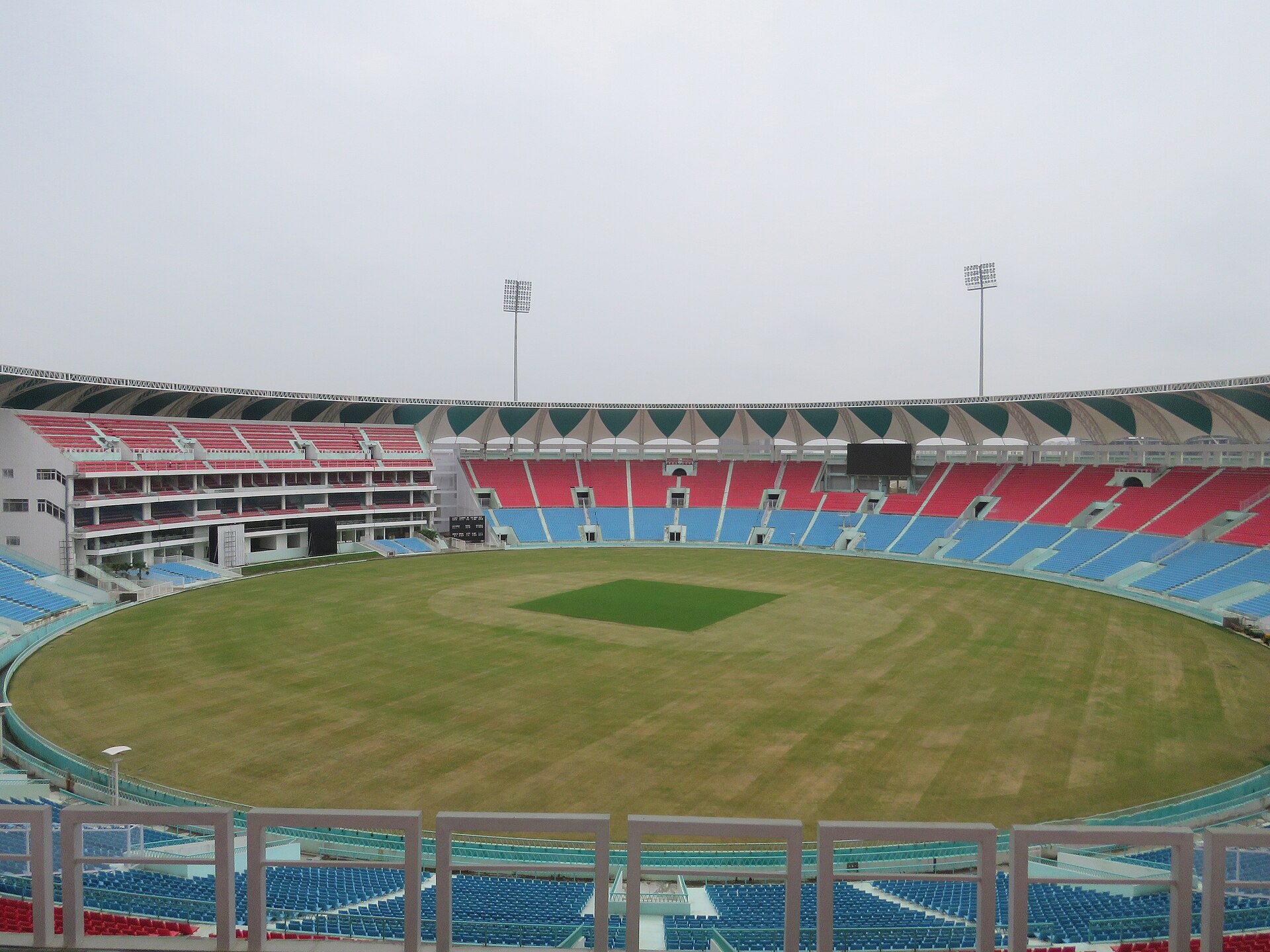
Tests and BBL from Australian time zones, plus A-League. Comfortable morning viewing rather than a late night, which is why Australian tours are the easiest overseas cricket to follow from India.
Scores, streams & in-play
Everything running on FairPlay right now, with times in IST and a board light enough to follow on a weak 4G signal. Below: what each stream quality actually costs per hour against a daily pack, and why your building cheers a wicket before your screen shows it.
On Now
Matches in play and starting shortly, priced both ways. Times are IST.
Prices shown are illustrative
Mumbai v ChennaiLive
Min 100 · Max 2,00,000
Min 100 · Max 2,00,000
Meerut Mavericks v Noida Super Kings
Min 100 · Max 50,000
Min 100 · Max 1,00,000
Min 100 · Max 50,000
Jaipur Pink Panthers v Bengaluru BullsLive
Min 100 · Max 25,000
Min 100 · Max 25,000
Min 100 · Max 50,000
Know Before You Stream
Video quality is the whole story. These are per-hour figures, with how long each one lasts on a 1.5 GB daily pack.
| Mode | Per hour | On a 1.5 GB pack |
|---|---|---|
| Scores and odds only | ~14 MB | Over 100 hours |
| Low (360p) | ~315 MB | About 4.9 hours |
| Standard (480p) | ~495 MB | About 3.1 hours |
| HD (720p) | ~675 MB | About 2.3 hours |
| Full HD (1080p) | ~1,350 MB | About 68 minutes |
Full HD does not survive one innings. A T20 innings is scheduled at about ninety minutes, and 1080p burns through a 1.5 GB daily pack in roughly sixty-eight. You would be out of data before the bowling side changed ends for the last time. Dropping to 360p gets you close to five hours from the same pack, and the scores board on its own would run for more than a hundred.
The IST Day
Sport runs around the clock somewhere, but not all of it is worth staying up for. Here is the day as it actually falls in Indian time.
Tests and BBL from Australian time zones, plus A-League. Comfortable morning viewing rather than a late night, which is why Australian tours are the easiest overseas cricket to follow from India.
Ranji Trophy, Duleep Trophy and day fixtures, alongside subcontinental internationals starting at 1:30 PM or 2:00 PM.
Early Premier League and European league fixtures land in the late afternoon here, which is the friendliest football slot an Indian viewer gets all week.
The IPL at 7:30 PM, ISL, Pro Kabaddi and the bulk of European football. This is the busiest block on the board by a wide margin.
Champions League, La Liga and Serie A late kick-offs. Worth knowing that European clock changes shift these by an hour twice a year while IST stays put.
NBA, MLS and South American football. A genuinely unsociable slot from India, and the one where people most often bet tired.
Coverage
Live data by sport, plus the tools for following more than one thing at once.
Every delivery updates the board with the score, the over and the current partnership, without waiting for the video to catch up.
Goals, cards, substitutions and shot counts as they are logged, with the clock running from the official feed rather than your stream.
Raid and tackle points, do-or-die raids and the all-out count for both sides through every Pro Kabaddi fixture.
Live scoring by game and set, including break points and tie-breaks, across all four majors and the tour below them.
Pick the fixtures you care about and get a push when they start, when a wicket falls or when a goal goes in.
Keep several matches on the board together, which is how most people watch a full IPL weekend or a Saturday of football.
If you have watched an India match in a flat with neighbours on every side, you know the feeling. A roar goes up through the wall, and four or five seconds later your screen finally shows the stumps go back. Nothing is wrong with your connection. The delay is built into how streaming works.
Internet video is not sent as a continuous signal. It is chopped into short files, usually about six seconds each, and your player downloads roughly three of them before it starts playing so that a momentary dip in signal does not freeze the picture. That buffer alone puts you around eighteen seconds behind the ground.
Add the time to encode the video into several quality levels, push it to a delivery network and get it across to your handset, and twenty to forty-five seconds is entirely ordinary — for any stream, on any service. Your neighbour is not on a better connection. They are probably on cable, which travels a shorter path.
Score data does not go through any of that. It is a small text update sent from the ground, so it reaches you in about a second. That is why the score on the board sometimes moves before the delivery lands on your screen, and it is worth understanding rather than treating as a glitch.
It also means the board is a genuinely good way to follow a match on its own. For cricket especially, it holds the over, the partnership and the run rate together on one screen, where a broadcast shows you those only when the director decides to. Plenty of regular users keep the board open and the video off. If you are acting on prices while a stream is running, the timing consequences are covered properly on in-play betting.

Most people here watch sport on a daily-pack connection rather than home broadband, and daily packs do not forgive a full HD stream. The table above is the practical guide: set the quality to 360p before a match starts if you are on mobile data, and keep HD for Wi-Fi.
Signal quality matters as much as the pack size. A stream that stalls repeatedly is worse than no stream, because each stall re-buffers and spends data on video you never see. On a train, in a lift lobby or anywhere the signal drops in and out, turning video off and following the board is not a compromise — it is the version that actually works.
India sits in a genuinely convenient time zone for cricket and an awkward one for a lot of else. Australian tours land in the morning, which is why they are the easiest overseas series to follow properly. European football fills prime time and the hours after midnight. Anything from the Americas needs you awake between 2:00 AM and 6:00 AM.
The trap worth naming is the clock change. Europe moves its clocks in late March and late October and India never does, so kick-off times you have learned by heart shift by an hour twice a year. Check the IST time on the fixture rather than trusting memory in those weeks, particularly if you have set an alarm for it.
A 2:00 AM start is the point where following sport and staying in control quietly separate. Tiredness does not feel like impairment from the inside, and a match that finishes at 4:30 AM will find you at your least sensible. If you regularly stay up for overnight fixtures, session limits and reminders are worth setting in advance rather than in the moment — responsible gaming lists the tools, and the FairPlay app can send a nudge at a time you choose.
Picture an ordinary Tuesday in a two-room flat in Kalyan. The fan is going, the cooker has whistled twice, and a man is holding his phone sideways over his plate because Mumbai are batting. His brother-in-law in Nashik keeps firing messages into the family group about a dropped catch, and every one of them arrives at the wrong moment, because the video on the phone is running a good half a minute behind everybody else in the country. Eventually he gives up, kills the stream and puts the FairPlay board on instead. The score snaps to the current ball. For the rest of that innings he reads the match rather than watching it, and for the first time all evening the group chat and his screen agree with each other.
That is a small discovery, but it is the one most people make for themselves after a season or two of following sport on mobile data. The picture is the slow part. The numbers are the fast part. Stop expecting the two to line up and the whole evening becomes calmer, your recharge lasts into the second innings, and nobody in the group chat spoils anything, because you already knew.
Say you walk in during the fourteenth over of a T20 with no idea what you have missed. Nothing needs scrolling. The board opens on the state of play as it stands: the score, the over, the two batters at the crease and what each of them is on, the bowler in his spell, and the run rate. That is roughly what a commentator gives you in his first sentence back from an ad break, except it is already sitting there and you did not have to wait for someone to say it.
Then a ball is bowled. Somebody at the ground logs it, the feed carries it out, and about a second later the number on your phone changes. If it was a wicket, the partnership resets and the incoming batter appears on nought. Had you left a stream running alongside, that same delivery would reach your screen twenty to forty-five seconds later — which is where the odd doubled experience comes from. You read the outcome, then you watch it arrive. Some people find that unwatchable and keep the video shut off entirely. Others prefer it, and treat the picture as confirmation of something the board already told them.
The same shape holds across the other sports, with different furniture around it. Football runs the official clock rather than your stream's clock, so the minute on the board is the real minute of the match. Kabaddi counts raid points, tackle points and the all-out tally, which is the only sensible way to follow a Pro Kabaddi tie standing up in a crowded local. Tennis moves point by point, then game, then set. None of it requires video to make sense, and all of it survives a signal that a stream would choke on.
A Saturday in season can stack a cricket game, two football fixtures and a kabaddi tie into the same few hours. The board will carry all of them at once, and that is genuinely useful right up to the point where it stops being useful. Reading four scoreboards is easy. Running four streams is not, because the arithmetic in the table further up is per stream, not per phone. Two 720p feeds for an hour comes to roughly 1,350 MB between them, which is a whole 1.5 GB daily pack gone with nothing left for the second half of anything.
What works is one match with the picture and the rest as numbers. Give the video to the fixture you actually care about and let the others sit on the board. You will not miss a goal either, since the alert fires off the data feed and therefore usually beats the broadcast to your notification tray. You end the night with your attention intact and a pack that still has something in it.
None of this depends on where in India you happen to be sitting. A data feed does not care whether it arrives over a fibre line in Bandra or over one bar of 4G somewhere in interior Chhattisgarh. The IST times on the fixture list are the same times for everyone. The score that ticks over in a Bengaluru flat ticks over in a Siliguri one. What differs between a metro and a small town is the network underneath, and the honest answer there is that the board handles a weak signal far better than any stream ever will.
That is the real argument for treating scores as the default rather than the fallback. Somebody following from a village with patchy coverage gets the same fourteen megabytes an hour and the same one-second update as somebody sitting on office Wi-Fi. The FairPlay India page covers the wider picture — which payment rails behave, how the rules read state by state, how support is reached from anywhere — but the short version for this page is that an account opened in Chennai behaves exactly like an account opened in Chandigarh.
Scores are free to look at. Live prices beside them are not, and that is the only real difference between browsing the board and using it properly. Signing up takes a mobile number, the OTP that lands on it, and a password you choose at that moment. There is no long form to fill and nothing to upload at this stage. Do the FairPlay register step once and the account exists.
Every visit after that goes through the same screen. Your number, the password you set, and you are back on the board where you left off. That is the whole of FairPlay login — one screen, the same one, for as long as you keep the account. Choose a password you do not use anywhere else, because it is the single thing standing between a stranger and your wallet.
Any platform with a large Indian following gets impersonated, and the fakes turn up exactly where you would expect them: a WhatsApp forward from a cousin, a Telegram group somebody added you to, an SMS at half past eleven. Three shapes come round again and again, and all three are easy to catch once you have seen them set out plainly.
The first announces a bonus that has supposedly been added to your account, with a link to claim it before it lapses tonight. The hurry is the tell. A real promotion sits in your account and waits for you; it does not need you tapping a forwarded link at midnight. The second comes from somebody calling themselves support, asking you to read out an OTP or confirm your password so they can release a stuck deposit. Nobody genuine will ever ask for either. An OTP exists so that the person holding the handset is the only person who can act, and reading it aloud throws away the entire reason it was sent. The third is a private payment link, usually wrapped in a believable story about a transfer that failed and needs redoing. Some of these ask for a small verification amount first — say ₹500, low enough that people pay it rather than argue. Deposits happen on the banking screen inside the app or the site, and nowhere else at all.
The general rule outlasts the specific examples, which change every few months anyway. Anything that reaches you from outside the app and asks you to move money or hand over a code is not from the platform. If a message rattles you, close it, open the app yourself, and look at your balance and your promotions there. If something really needs your attention it will be visible in the account. If it is not visible, the message was a lie.
Get the quality right before the first ball rather than after the pack has gone. Set it to 360p if you are on a daily pack and keep the higher settings for Wi-Fi; most players remember the choice per device, so it is a decision you make once. Switch alerts on for the fixtures you genuinely follow and off for the rest, because a phone that buzzes for every goal in Europe is a phone you will end up silencing altogether.
Then settle, before anything starts, how long you are actually staying up. A 2:00 AM start from the Americas asks something very different of you than a 7:30 PM IPL game does, and that is a far easier judgement to make while you are still awake to make it.
FAQ
Data, delay, timings and following matches without video.
It depends almost entirely on video quality. Following scores and odds without video costs roughly 14 MB an hour, so a daily pack lasts over a hundred hours. Video is a different order: about 315 MB an hour at 360p, 675 MB at 720p and around 1,350 MB at 1080p. On a 1.5 GB daily pack, full HD gives you about 68 minutes — which does not last one scheduled T20 innings. Dropping to 360p on mobile data and saving HD for Wi-Fi is the single change that makes the most difference.
Because of how streaming works, not because something is broken. Video is cut into segments of roughly six seconds each and your player collects about three of them before it starts playing, so around eighteen seconds are gone before encoding, uploading and delivery are even counted. Twenty to forty-five seconds behind the ground is normal for any internet stream, including the big OTT apps. That is why you sometimes hear your building react to a wicket before you see it.
Yes, and it is what most regular users actually do. The scores-and-odds board updates from the data feed, which reaches you faster than video and costs almost no data. For cricket in particular the board is often the better experience — it shows the over, the partnership and the run rate together, where the broadcast only puts those on screen when the director chooses to.
Indian prime time between 7:00 PM and 11:30 PM is the busiest block, holding the IPL at 7:30 PM, the ISL, Pro Kabaddi and most European football. Australian cricket lands in the morning here, which makes those tours the easiest overseas cricket to follow. Anything from the Americas falls between 2:00 AM and 6:00 AM, which is worth thinking about before you commit to a night of it.
They do, and it catches people out every year. Europe moves its clocks in late March and late October while India does not, so a fixture you are used to at 1:30 AM IST shifts to 12:30 AM or the other way round. Nothing on the fixture list looks different, so check the listed IST time rather than relying on memory during those two weeks.
The scores board is designed for exactly that. It is a light data feed rather than video, so it keeps updating on a weak 4G signal, in a lift lobby or on a train where a stream would stall completely. If the video is buffering repeatedly, switching it off and staying on the board is usually better than fighting it.
Yes. The board holds several fixtures together across different sports, so a Saturday with two football matches and a cricket game can sit on one screen. Video is the part that does not multiply well — two streams doubles your data and generally halves your attention.
They come from professional data feeds that are updated at the ground, so they are quick and accurate, but the official scorecard published by the governing body is always the final word. Occasionally a scoring decision is reviewed and corrected afterwards, which is normal in cricket and shows up as a small adjustment.
Explore FairPlay