
A game with nothing to get wrong
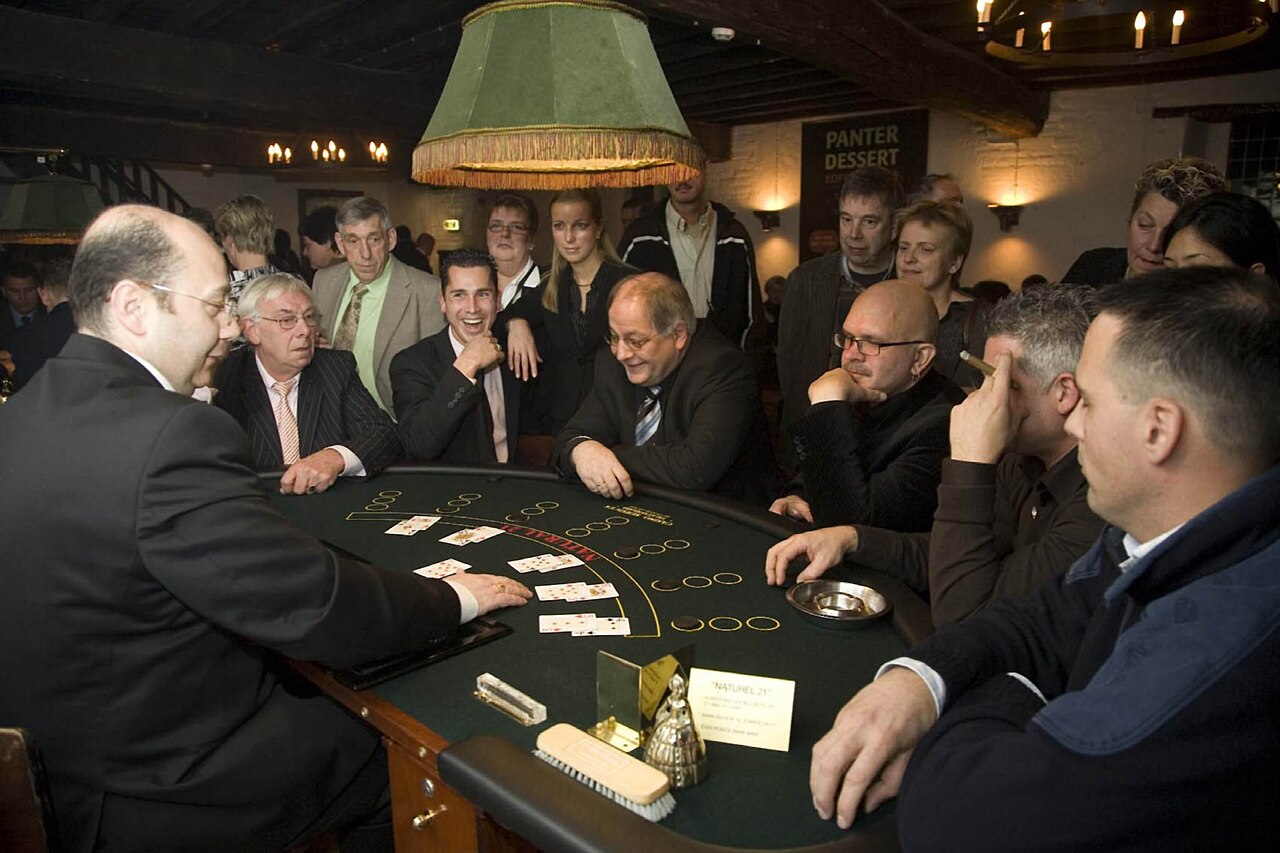
Baccarat is the only major table game where you make no decisions after your bet. Whether a third card is drawn is set by a fixed table of rules that neither you nor the dealer can influence. Pick banker, player or tie, and the hand plays itself out.
A Thursday evening, and eight banker wins in a column
Nikhil works at a logistics office off Avinashi Road in Coimbatore and is usually home by half past nine. Late enough that dinner is a plate kept warm on the stove, early enough that the hour after it belongs to him. He tops up ₹1,000 by UPI while the lift is still climbing, and the bank message arrives before he has his shoes off. By the time he sits down at the kitchen table the FairPlay lobby is open on his phone and a live baccarat dealer is halfway through a shuffle.
The big road down the side of the screen shows six banker wins stacked in one column. His brother-in-law has been at the same table for twenty minutes and puts a single line into the family group: player now, must come. Nikhil thinks the same thing, because six of anything in a row looks like a lot. He backs player for ₹200 and the hand comes banker. He backs player for ₹400 and it comes banker again. The column is eight deep, he is ₹600 lighter, and the cheapest bet on the table has been sitting untouched in front of him the whole time.
What actually happens as that column keeps growing
Nothing happens. That is the honest and mildly deflating answer. The shoe holds no record of the six hands before it, the cards still in it are simply the cards still in it, and eight decks are deep enough that pulling a handful out barely moves the composition. Banker was winning 45.86% of hands before the column started and it is winning 45.86% of hands during the column, because the drawing rules that produce that figure never glance at the road map on their way past.
What did change was Nikhil's stake. He went from ₹200 to ₹400 on a bet priced at 1.24% against him instead of 1.06%, on the strength of a pattern carrying no information at all. Either decision on its own costs very little. The habit underneath them is the expensive part, because it quietly converts a flat evening into a doubling one, and a doubling one into a hole that a single lucky hand is then asked to fill.
The version of that evening which works is dull to describe. Pick banker, keep the stake identical on every hand, and let the column grow to whatever length it fancies. The eighth banker win does not make the ninth any more or less likely, so there is no point in the shoe that has earned a bigger bet than any other point. Every rupee moved off banker is a rupee bought at a worse price. That is the entire strategy, it fits in two sentences, and almost nobody can bring themselves to sit through it.
The exact opposite of blackjack
That makes for an interesting pairing with the game next to it in the lobby. Blackjack hands you real decisions and prices the game on the assumption you will make them well, so playing badly is expensive. Baccarat removes the decisions entirely and charges a flat rate for the privilege.
Which is better depends on what you want. If you are willing to learn a few rules, blackjack is much cheaper. If you want to sit down knowing that nothing you do can make it worse, baccarat at 1.06% is genuinely reasonable value and considerably cheaper than roulette at 2.70%.
Four road maps, none of them predictive
No other casino game keeps records like baccarat does. The big road logs results in columns; the big eye boy, small road and cockroach road each track whether the big road is behaving regularly, at different offsets. Players watch them closely and bet on what they appear to show.
They are records, not forecasts. Every hand is dealt from a shoe that has no memory of the previous one, so a column of eight banker wins tells you precisely what happened and nothing whatsoever about the ninth. This is worth saying plainly because the sheer elaborateness of the displays implies otherwise — four separate grids maintained to that level of care look like analysis, and they are decoration.
None of which means you should ignore them. Following the road is a real part of the enjoyment for a lot of players, and there is nothing wrong with that as long as it is not driving your stake size. Betting bigger because a pattern looks due is the version that costs money.
Squeeze, speed and what they actually change
Live tables come in two moods. A squeeze table has the dealer revealing the final card slowly, drawing out a result that is already determined. A speed table strips that away and runs hands in a fraction of the time.
Neither changes the odds by a fraction of a percent — but they change how many hands you play in an evening, and the edge applies once per hand. A speed table at the same stake simply applies the same 1.06% more often, which is the mechanism set out in full on the slots page. If you are choosing between them on cost rather than preference, the slow one is cheaper.
Side bets and stakes
Pair and perfect-pair side bets sit alongside the main three, and they are priced in the same spirit as the tie — well above the banker and player bets. They are there for people who want a bigger swing than a near-even-money bet provides, which is a legitimate thing to want as long as the price is understood.
Live tables generally open around ₹100 and baccarat usually carries the highest maximums in the building. That is a legacy of the company the game has kept for decades rather than anything about its odds. Deposit and session limits are in your account settings — responsible gaming lists them, and they are worth setting before a high-limit table rather than after.
What an hour at ₹500 a hand actually costs
A house edge is a rate rather than a fee, so it only becomes a number once you know how much money passes through the table. Say Nikhil settles on ₹500 a hand on banker and gets through forty hands in an hour at an unhurried live table. That is ₹20,000 of turnover, and 1.06% of ₹20,000 comes to a little over ₹200. It is not what he will be up or down at the end — that figure will be much larger in one direction or the other — but it is what the game charges him for the hour.
Holding that number makes the rest of the page concrete. A speed table clearing eighty hands in the same hour doubles the turnover and therefore doubles the charge, at an identical stake against identical odds. Had he spent Thursday on player rather than banker, those same forty hands would have run to roughly ₹250 instead of ₹200 — small, but paid every hour, forever. Put the tie in the same sum and it stops being academic: 14.36% of ₹20,000 is close to ₹2,900 for the hour, which is why that bet gets a warning rather than a footnote.
The two lines to read before you sit down
Every live table carries an information panel, and two lines on it deserve more attention than the rest. The first is the commission rule, because a table advertising no commission is the table paying half on a banker six, and that is the dearer game despite reading as the friendlier one. The second is the minimum and maximum. A room whose floor is comfortable and whose ceiling is enormous is still a room where the only sensible move is to keep your own stake flat from the first hand to the last.
It also helps to know whether the cards are being dealt by a person or by software. The live rooms are set out on live casino, and the practical difference is that a software table reshuffles for every hand while a physical shoe is dealt down across many. Neither hands you anything usable. It simply means that on a software table even the theory behind counting has no floor to stand on, which saves you the trouble of wondering.
The same table, in Coimbatore or anywhere else
Nikhil's account behaves in Coimbatore precisely as it would in a flat in Powai. The lobby lists the same rooms, banker still pays even money less the same commission, the minimum shown on a table is the minimum for everybody seated at it, and a UPI deposit from a district-town bank clears down the same rails as one sent from a metro. No separate set of tables is held back for the larger cities, and no version of the 5% varies by pin code.
What does vary is duller and more ordinary. A weak mobile signal makes a video feed stutter, which is irritating during a squeeze and completely irrelevant to the result of the hand. Banks run maintenance at their own odd hours. Past that the account is the account, which counts for most among people who move between a home town and a work city and would rather not relearn anything at either end. FairPlay India sets out the deposit routes, the language options and the support hours in detail.
If you have not opened an account yet
The sequence is shorter than most people assume. You enter a mobile number, an OTP lands on that number, you type it back in, and you pick your own password at that point rather than being issued one. That is registration finished, and FairPlay register takes it screen by screen if you would sooner read it through before starting.
Every visit after that uses the same door. The FairPlay login page asks for that number and that password, and no other pairing opens the account. Keep that near the front of your mind, because it reduces an entire category of trouble to one short test: anybody asking for those two things anywhere other than that page is not the site.
The forward saying your bonus is waiting
Anything with a following in India gets impersonated eventually, and the messages turn up in a small number of familiar shapes. One announces a bonus already sitting in your account which will only be released once a link is tapped. Another arrives as a support agent who needs the OTP that just reached your phone, purely to confirm you are you. A third is a payment page copying the deposit screen closely, parked on a domain nobody reads carefully at eleven at night.
The tell is identical in all three. Nobody working for a real platform requires your OTP or your password — the OTP exists so that only you can approve whatever it approves, and passing it along defeats the one job it has. Money that genuinely belongs to you turns up in the account when you log in, without a forwarded link having anything to do with it. A real deposit begins inside the app, never inside a message. If something arrives and you are not certain, close it, open the app yourself and look. Two minutes of checking is cheaper than explaining an emptied wallet to your bank in the morning.