

Full Time Result
Home, draw or away over ninety minutes plus stoppage time. Extra time and penalties do not count unless the market says otherwise.
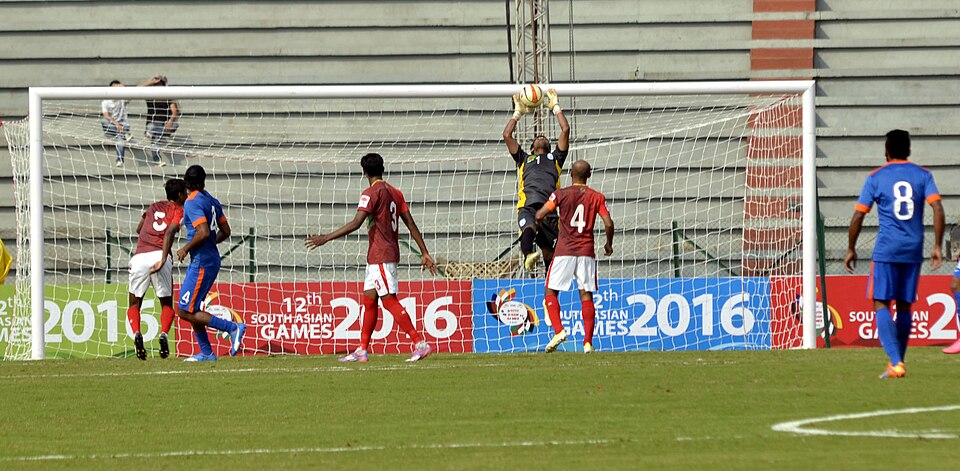
120+ Competitions
The Premier League through the Indian evening, the ISL at 7:30, and the Champions League for anyone still awake at half past midnight. FairPlay prices all of it, with Asian handicap explained properly rather than assumed. Bets from ₹100.
Prices shown are illustrative
Min 100 · Max 1,00,000
Mumbai City v Bengaluru FCLive
Min 100 · Max 50,000
Min 100 · Max 50,000
Min 100 · Max 2,00,000
Min 100 · Max 1,00,000
Min 100 · Max 50,000
Watching From India
Half of following European football from India is knowing which matches you can realistically stay up for.
| Competition | Typical IST kick-off | Worth knowing |
|---|---|---|
| Indian Super League | 7:30 PM | The only major league played at a comfortable Indian hour |
| Premier League, early Saturday | Around 5:00–6:00 PM | The lunchtime UK slot. Best fixture of the week for Indian viewers |
| Premier League, main Saturday block | Around 8:00–8:30 PM | The 3pm UK kick-offs, landing right in the Indian evening |
| Premier League, late Saturday | Around 10:30–11:00 PM | Usually the pick of the weekend, and still manageable |
| Premier League, Sunday | Around 7:00–10:00 PM | Two or three matches spread across the Indian evening |
| Champions League | Around 12:30–1:30 AM | Requires commitment. Both midweek slots are past midnight here |
| La Liga | Around 8:00 PM – 1:30 AM | Spread widest of any league. El Clasico is often the late slot |
| Bundesliga, Saturday | Around 7:00–10:00 PM | German afternoon football is Indian evening football |
These shift twice a year, and India does not. European clocks go forward in late March and back in late October, while Indian Standard Time never changes. So every European kick-off time on this list moves by an hour on those two weekends. A match you are used to catching at 8:30 becomes a 7:30 — and people miss the first half of one fixture every spring because of it.

Betting Markets
A big European fixture opens with more than 180. These are the ones worth understanding first.
Home, draw or away over ninety minutes plus stoppage time. Extra time and penalties do not count unless the market says otherwise.
A goal start or deficit that removes the draw. Quarter lines like -0.25 split your stake across two handicaps, which is explained below.
The 2.5 line is standard, with 1.5 and 3.5 priced alongside it. Which line is right depends far more on the league than on the two teams.
A yes or no on both sides finding the net. Popular in open leagues and a poor bet in defensive ones like the ISL.
The exact final scoreline. Long odds, and genuinely tradeable in-play once the shape of a match becomes obvious.
Void and stake returned if your pick does not start. Coming on after a goal has been scored normally settles as a loser.
Covers two of the three results at a shorter price. Often the sensible way to back an away underdog in a tight league.
Repriced after every goal. The fastest-turning football market, and the one that moves hardest on a red card.
Football is the second sport in India by betting volume and the gap narrows every ISL season. It is also the sport where prices and probabilities line up most honestly, because the markets are deep and the sample of matches is enormous. That means the edge does not come from finding an obscure market — it comes from team news, timing, and understanding one particular bet type properly.
Take an ordinary Friday last season in Kochi. Kerala Blasters were at home to FC Goa, kick-off at 7:30, and a friend of mine had the match on the television with his phone face-up on the arm of the sofa. He watches far more Premier League than ISL, and he bet the way he watches: over 2.5 goals, ₹1,000, placed while the two teams were still lining up. His reasoning sounded sensible enough said out loud. Both sides like the ball, the ground would be loud, and an English fixture with that shape usually gives you three.
Half time came and went at 0-0. There had been two shots on target in the whole first half, and one of them was a header back to the goalkeeper that nearly went in. Goa scored the only goal of the night somewhere around the seventieth minute, his phone buzzed once when the market settled, and the ₹1,000 was gone before the celebration finished. Nothing had failed technically. The bet was priced, accepted and settled exactly as it should have been. What failed is that he brought a Premier League expectation to an Indian league match. Ask him at 7:29 whether the ISL is tighter and slower than England and he would have said yes without pausing. He simply never let that opinion reach the bet slip.
Follow that same bet through the machinery, because the sequence is worth knowing before you are inside it. He tapped the over 2.5 price on the football board, which opened a slip showing the price and an empty stake box. Say the number sitting there was 1.85. You type ₹1,000, the slip works out what returns if it wins, and confirming moves that money out of your available balance and into an open bet. That transfer is the moment the bet starts to exist, and no amount of tapping back undoes it.
At kick-off the pre-match version of the market closes and the in-play version takes over at a new number, because a goal line is worth something different after ten goalless minutes than it was before the whistle. His bet does not move. It stays at the price he took. What changes is that a fresh over 2.5 bet is now on offer at a shorter price, and he could lay the same line to reduce his exposure if he wanted to. Every goal, red card and penalty suspends the market for a few seconds while the price is rebuilt, which is why a number you were reaching for occasionally disappears mid-tap.
Settlement is the quick part. Full time markets settle on ninety minutes plus stoppage, and in football that usually means the money has already moved by the time the players reach the tunnel. A winning bet credits back into the same wallet the stake came from, and that balance is available immediately to bet again or to take out. A losing one simply stops existing, since the stake was accounted for the moment it was placed. There is nothing to collect and no confirmation to chase.
Whole and half handicaps are straightforward. A team at -1.5 must win by two. A team at +1 wins your bet if they win or draw, and returns your stake if they lose by exactly one goal.
The quarter lines are what confuse people, and they are the ones Indian punters use most. Backing a team at -0.25 with ₹1,000 splits your stake: ₹500 goes on the 0 line and ₹500 on the -0.5 line. If your team wins, both halves win. If they lose, both lose. If it finishes level, the ₹500 on 0 comes back as a push while the ₹500 on -0.5 loses — so a draw costs you half your stake, not all of it.
That is the entire point of a quarter line: it is a hedge built into the bet, letting you back a slight favourite while keeping half your money safe against a draw. Once that clicks, the whole Asian handicap board becomes readable.
The 2.5 line is standard because it sits closest to the average across major European leagues. But averages differ, and the ISL is measurably more defensive than the Premier League. A match that would be a comfortable over 2.5 in England is frequently an under in India.
The practical rule is to set your expectation from the competition first and adjust for the two teams second. Punters who watch mostly European football and then bet the ISL with English instincts lose money on totals with impressive consistency.
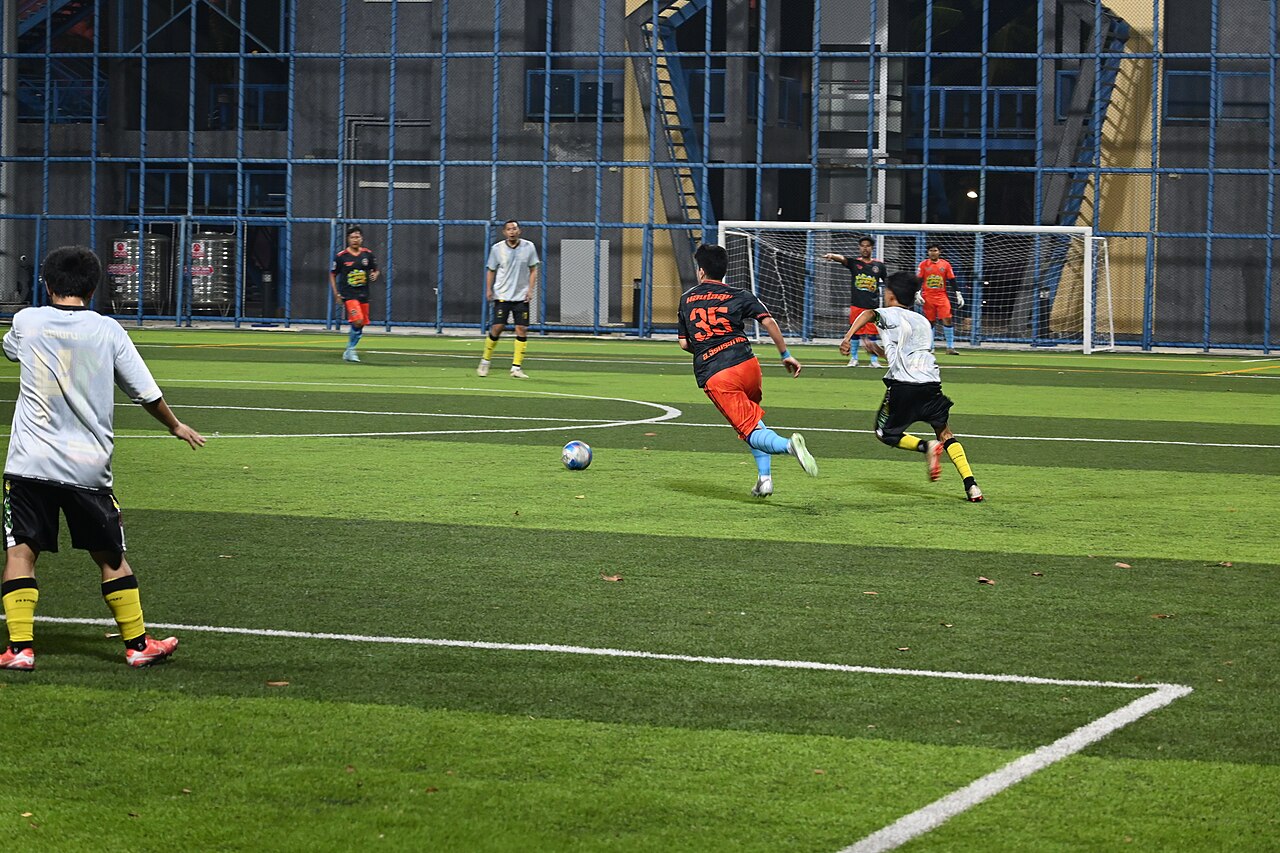
A confirmed line-up an hour before kick-off is the single biggest pre-match price mover in football. A first-choice striker rested before a European tie can shift a match result price by ten percent or more, and rotation is heaviest exactly when the fixture list is busiest.
For an Indian bettor there is a practical wrinkle: confirmed teams for a 12:30 AM Champions League match land at around 11:30 PM IST. If you are betting before going to sleep and setting an alarm for the second half, you are betting on projected line-ups. That is a real disadvantage and worth accounting for.
In almost every Indian city, cricket dominates betting volume by a wide margin. Kolkata is the exception. The Mohun Bagan and East Bengal derby draws interest comparable to an IPL match, and the market for it is far thinner than any Premier League fixture.
Thin markets plus deep local knowledge is where edges live. If you follow Indian football closely, the Kolkata derby and the ISL generally are far more promising hunting grounds than trying to out-think the Premier League market.
None of the above behaves differently by state or city. A FairPlay India account shows the same football list, the same handicap lines and the same kick-off times to somebody in a Bengaluru flat and somebody in a district town in Vidarbha with one reliable banking app in the house. Kick-off times are the neatest illustration of that, because Indian Standard Time is a single zone from Bhuj to Itanagar. A 7:30 ISL match is 7:30 for everybody, and a Champions League tie is past midnight for all of us equally. There is no regional edition of the board where an Ahmedabad account is shown a different price on the same fixture.
The practical version of that is worth stating plainly. The ₹100 floor, the per-match ceilings printed on each row, the way a market suspends around a goal and returns a few seconds later — identical nationwide. The only real variables are your own connection and your own bank, and both of those sit between you and your service providers rather than having anything to do with the state your account was opened in.
Everything so far assumes an account already exists, so here is the part that comes before it. To FairPlay register you give a mobile number, receive an OTP on that number, type it back and choose a password at that point. That is the whole of it. No document upload at the registration stage and no waiting period before you can look at the board, although verification does follow later and is far better done on a quiet evening than on the night you first want to take money out.
After that, every visit goes through the same FairPlay login screen — the number you registered with and the password you picked. Same screen on a laptop at home, same screen on a phone in the back of an auto, and that screen is the only place the password is ever typed. If you are reading this an hour before an ISL kick-off, the honest suggestion is to register now and then watch the board with nothing on it for a match or two. Seeing prices move on a fixture where you have no stake teaches more in ninety minutes than any paragraph here can.
Football nights are exactly when the fake messages turn up, because that is when people are sitting with a phone in one hand and money on a match. The common one is a forward announcing that a bonus has been released on your account and a link must be tapped to claim it before the second half starts. The urgency is the tell. A real bonus sits in the account and can be seen by opening the site yourself, and it never needs rescuing from expiry by a stranger in a group chat.
The more dangerous version claims to be support. It lands while you have an open bet, says something plausible about your account, and asks for an OTP or your password to release a payment that is supposedly stuck. Support asks for neither, ever. Not to confirm who you are, not to push a payout through, not at 1 AM in the middle of a Champions League night. The same goes for payment links sent by message: a deposit is started from inside your account, not from a link somebody forwarded you. If a message leaves you unsure, shut it and open the site by typing the address in yourself. Checking your own balance directly answers the question in ten seconds and costs nothing at all on the rare occasion the message turns out to be genuine.
European fixtures take up to ₹2,00,000 and ISL matches up to ₹50,000, with each match showing its ceiling on the board. Full time markets settle on ninety minutes plus stoppage; anything involving extra time is a separate market and priced as one.
Abandoned matches follow the rule printed on each market, which usually voids bets unless the fixture is completed within a stated window. Winnings land in your wallet at settlement, and payouts from a verified account are typically in your bank inside ten minutes — which is genuinely useful at 2 AM after a Champions League night. If football is where most of your betting happens, a deposit limit set before the season is worth more than one set during it. Football betting is for adults aged 18 and over.
FAQ
Handicaps, kick-off times and settlement rules, answered plainly.
The Indian Super League plays at 7:30 PM IST, which is the most convenient of the lot. Premier League fixtures run from around 5:00 PM through to about 11:00 PM IST on a Saturday, and Sunday matches sit in the evening. Champions League games are past midnight, typically between 12:30 and 1:30 AM. Remember that European clocks change in late March and late October while Indian clocks never do, so every one of these shifts by an hour twice a year.
It gives one team a virtual goal start or deficit, which removes the draw from the market and lets a mismatch be priced as a roughly even bet. Backing a favourite at -1.5 means they need to win by two clear goals. Backing an underdog at +1 means you win if they win or draw, and get your stake back if they lose by exactly one.
Your stake is split across two handicaps. A ₹1,000 bet at -0.25 is ₹500 on the 0 line and ₹500 on the -0.5 line. If your team wins, both halves win. If the match is drawn, the ₹500 on 0 is returned as a push and the ₹500 on -0.5 loses — so a draw costs you half your stake rather than all of it. If your team loses, both halves lose.
No. It settles on ninety minutes plus stoppage time only. A cup tie that goes to extra time or penalties is settled on the score at the end of normal time, unless you are betting a market specifically labelled as including extra time — which knockout competitions do offer separately.
Lower than you would in the Premier League. The Indian Super League is a more defensive competition than the major European leagues, so the 2.5 line that suits an English match is often too high for an Indian one. Under 2.5 and no on both teams to score are more frequently the right side in the ISL than instinct from watching European football suggests.
Yes, and football moves differently from cricket in-play. Prices sit fairly still and then jump on goals, red cards and penalties rather than drifting continuously. Markets suspend for a few seconds around each of those events while the price is reformed. Next goal is the market that reprices most sharply.
If they take no part in the match at all, the bet is void and your stake comes back. If they come on as a substitute after a goal has already been scored, the standard rule settles the bet as a loser rather than voiding it. The exact rule is printed on the market, and it is worth reading before backing a squad player.
From ₹100 up to ₹2,00,000 on major European fixtures, with ISL matches taking up to ₹50,000 and smaller competitions lower. Big derbies and knockout ties carry the highest ceilings of the season. Each fixture displays its own maximum on the board.
Explore FairPlay