
A cricketing state, on its own terms
Set the legal question aside for a moment and Gujarat is one of the most interesting cricketing regions in India — three first-class sides, a recent national champion from an unfashionable corner of the state, and the largest cricket ground ever built.
Depth that gets noticed late
Saurashtra, Baroda and Gujarat are three separate teams with three separate histories, and only Maharashtra can say the same. That structure produces more first-class cricketers, more competitive fixtures and a domestic scene that is genuinely difficult to follow from outside.
Saurashtra's two titles are the case that makes the point. A region without a famous cricketing name assembled a side good enough to win the country's premier first-class competition twice inside four seasons. National attention arrived considerably later than the performances did, which is a pattern worth remembering about domestic Indian cricket generally — reputation lags reality, often by years. The wider domestic picture is on the cricket page.
A stadium built at a different scale
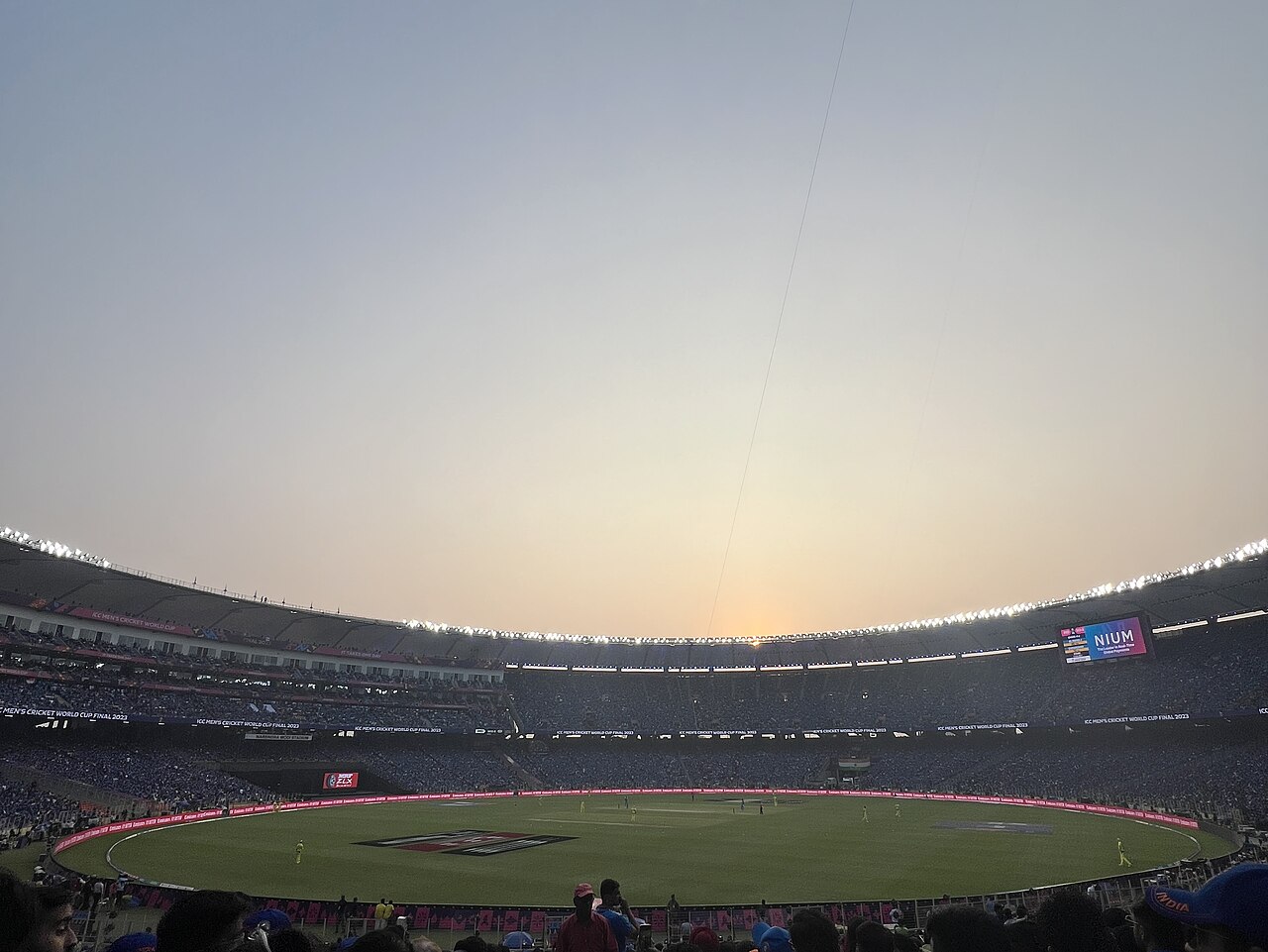
The Narendra Modi Stadium in Ahmedabad holds well over a lakh of spectators, which makes it the largest cricket ground in the world by a clear margin. Two design choices set it apart beyond the size.
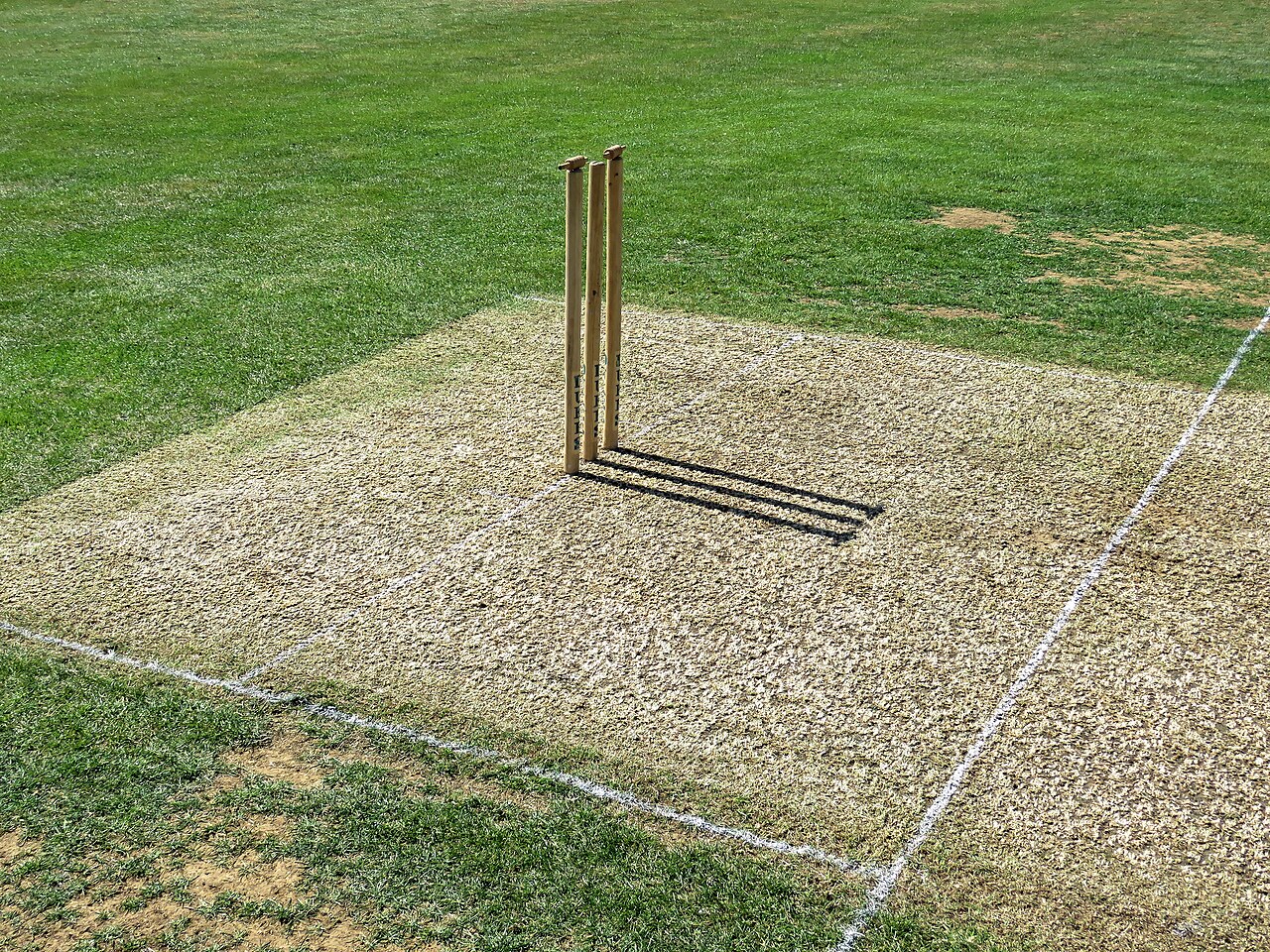
It is lit by a continuous ring of LEDs set into the roof rather than by four floodlight towers, so the tower shadows that stripe other grounds during evening play simply do not appear. And the square carries around eleven separate pitch strips, several times what a conventional venue prepares.
Why eleven strips complicates the numbers
A ground with a handful of pitches tends to behave consistently. The strips age together, get similar preparation, and a venue average describes something real. Eleven strips breaks that assumption, because the curator can choose which one a given match is played on.
Two matches at the same stadium a few weeks apart may therefore be played on genuinely different surfaces, while every statistic files them under one venue. Anyone reading ground history here is averaging across choices that were made deliberately rather than across a single settled surface — which is a different problem from a pitch that has changed over the years, and arguably a harder one, because it can vary match to match rather than era to era.
The two days the state looks up
Uttarayan, in mid-January, is not a background festival here. For two days the rooftops of Ahmedabad, Surat and Vadodara fill with people flying kites from morning until well after dark, and the state's attention goes there entirely.
Very few things in India displace sport as completely. It is a genuine feature of the Gujarat calendar rather than a piece of colour, and if you follow the state's cricket it is simply a period when nothing else is competing for anyone's attention.
Accounts, language and limits
Where an account is permitted, Gujarati is staffed on live chat and WhatsApp at any hour alongside Hindi and English, and a conversation opened in Gujarati stays in Gujarati. Verification, banking and the name-matching check that delays most first payouts are covered on the withdrawal page.
Deposit limits, loss limits and self-exclusion are set out on responsible gaming, and they are worth reading whatever your circumstances. If any part of your own position is unclear, the right step is advice from someone qualified rather than an interpretation of a page like this one.
A Saturday morning at Khandheri
Hitesh keeps a hardware shop off Gondal Road in Rajkot and he shuts it till noon exactly twice a season, both times for the second day of a Ranji match. The drive out to Khandheri takes longer than the distance deserves, because the last stretch runs single lane and there is always a tractor on it. He got there at ten past nine, parked on grass, and walked in behind a family carrying a steel tiffin the size of a small suitcase. A ground built for tens of thousands had a few hundred people scattered across it. That is most of the appeal. You can hear the ball come off the bat.
Six of them from the same gully side keep a group chat running through a match, and four of the six were at work that morning. The chat is mostly one-word verdicts and blurred photographs of the scoreboard. At about half past ten his phone buzzed with something from an entirely different part of his life — the bank settlement message for Friday's card machine, ₹8,400, arriving in the middle of a maiden over. He read it, turned the phone face down on the concrete step, and went back to watching a seamer bowl the sixth of the eight overs he would send down before drinks. That is the honest rhythm of a first-class day in this state. Long stretches where almost nothing happens, two or three overs that settle the session, and a handset that keeps interrupting with everything else you are responsible for.
What actually happens across a first-class day
The shape of that day is far more fixed than a scorecard suggests, and knowing it in advance changes what you look at. Play starts in the morning and the first session runs two hours to lunch. The second runs two hours to tea. The third goes to stumps or to the full quota of overs, whichever the clock and the over rate allow. The new ball becomes available after eighty overs and the fielding captain usually takes it the moment it is offered, so the last hour of a day can look nothing at all like the four hours in front of it.
That structure is why the first hour tells you more than the closing total does. On the morning Hitesh drove out, the ball moved for roughly forty minutes and then stopped moving, and everyone who had walked in expecting a low-scoring day quietly revised the thought over their tiffin. By tea the openers had put on a stand that made the first session read like a different match. A scorecard glanced at that evening shows none of that sequence. It shows a figure. The figure is the least informative thing about the day.
The strip they chose, and how you notice
The eleven-pitch question at Ahmedabad has a quieter version at every other ground in the state. Curators prepare more than one strip, somebody decides which of them a fixture is played on, and that decision is taken days before anyone buys a ticket. You cannot read it off a fixture list. You can usually see it inside half an hour of the first ball.
The tells are ordinary ones. How proud the seam sits on the surface. Whether the ball is carrying through to the keeper at chest height or dying somewhere near his knees. How much grass survived the last cut. Whether a spinner is on before lunch on the opening day. None of that is specialist knowledge, and none of it requires equipment. It is what anyone who has sat through a few days at the same ground absorbs without being taught, and it describes the surface in front of you far better than an average compiled across strips that were never the same strip twice.
Vadodara and Surat keep different hours
Gujarat is not one audience watching one clock. Vadodara follows its cricket the ordinary way, evenings and weekends and a radio in the background. Surat does not, because a large part of that city works to the rhythm of the diamond and textile trades, where the day ends late and begins again early. A fixture that is prime time in Rajkot is something a Surat shift catches in fragments, on a handset, between other obligations.
Then the monsoon arrives and rearranges the lot. Between June and September an evening plan in Ahmedabad depends on which road you take home and whether that road holds water, and there are stretches near the river where it reliably does. European football kicking off past midnight sits outside that problem completely, which is part of why it holds an audience here among people with no attachment to any European club at all. It is the sport that happens to be on once the state has finally gone quiet.
An account behaves the same in every part of India
Where an account is permitted, nothing about the way it works is tied to one city. The wallet, the login screen, the fixture list and the support queue behave the same on a handset in Ahmedabad, in a district town in Kutch running on two bars of signal, or in a rented room in another state during a long work posting. Somebody from Rajkot who moves for a job keeps the same account and the same bank details attached to it, and notices no difference beyond which sides the list puts in front of them. FairPlay India sets out how the picture differs from state to state, and it is a map of where things stand rather than permission to act on them. Whether an account is open to you at all depends on the rules currently in force and on where you are physically located, and that is a question to settle before any other.
If you have not opened an account
For a reader whose own position allows it, the mechanics are short. Registration asks for a mobile number, sends an OTP to that number, and has you set a password at that point. That is the whole of the first screen, and FairPlay register runs through it in order if you would rather see the steps before you start. Every visit after that goes through the same FairPlay login screen with that number and that password. So the only choice on the page with any weight in it is the password itself — use one you have not used anywhere else, and keep it written down somewhere safe rather than trusting your memory six months from now.
The identity check is better done early, on a slow weekday afternoon, well before anything is waiting on it. Sending a document takes a few minutes when no timing depends on it. The FairPlay ID page lists which details have to line up with each other, while deposits and the payment methods page cover the banking end of it.
Messages that are not from us
Anything with a recognisable name attached gets impersonated sooner or later, and cricket groups on WhatsApp in this state run to several hundred members each. Three patterns recur often enough to be worth naming plainly. The first is a link to an app update, forwarded into a group by somebody being helpful, pointing at a file parked on a host with no connection to the platform. Installing it hands a stranger the keys to the handset. An update comes from the same place the app itself came from and from nowhere else, and the FairPlay app page says exactly where that is.
The second is a UPI request that arrives described as a refund, and it works because the wording points the wrong way. Approving a collect request sends money out of your bank account. It has never once brought money in. A genuine refund needs nothing approved on your phone at all. If a message wants you to accept a request so that you can receive something, the direction of travel is reversed and the message is not what it claims to be.
The third is a call from somebody presenting themselves as support, generally while something is actually pending on the account, asking for an OTP or a password so they can push it along. Nobody working on the platform asks for either, in Gujarati or in any other language. An OTP exists to prove that the person holding the phone is the account holder; spoken aloud to a stranger it proves precisely the opposite. Real help is reached from inside the app or through the contact page, and the customer support page sets out the hours and the languages staffed. Urgency runs through all three of these. A message that needs you to act within the next two minutes is selling you the two minutes, not the help.